Seattle Paddle Board Packing Checklist: What to Bring
The best packing list is the one that separates what you need to bring from what is already in the rental. With Chapin Adventures, the board or kayak, paddle, life vests, electric pump, dry bag, waterproof phone case and speaker are included. Your job is clothing, water, food and a few trip-specific extras.
Already included with your rental
- Paddle board, single kayak or double kayak
- Paddle or paddles
- USCG life vests
- Electric pump
- Dry bag
- Waterproof phone case
- Bluetooth speaker
- Paddle-board leash where applicable
Check the current rental page for pricing and the exact kit, or visit the FAQ before pickup.
Wear to the lake
- Quick-dry shorts, leggings or swimwear
- Synthetic or wool top
- Secure sandals, water shoes or neoprene booties
- Sun hat
- Sunglasses with a retainer
- Weather-appropriate thermal protection for cold water
Avoid cotton and jeans. They become heavy, cold and slow to dry.
Put in the dry bag
- Light warm layer
- Keys
- Medication
- Compact snacks
- Small sunscreen
- Emergency contact information
The dry bag is not a reason to bring valuables you do not need. Leave wallets, laptops and irreplaceable items secured elsewhere.
Leave in the car
- Full change of clothes, including underwear and socks
- Towel
- Extra water
- Warm jacket
- Trash bag or wet-gear bag
- First-aid kit
Food and water
Bring more drinking water than you think you will need, especially on a hot day or a lake without potable water. Choose food that can handle a little movement and heat: sandwiches, fruit, bars and salty snacks are easier than an elaborate open container.
Pack out every wrapper. Do not leave food scraps for wildlife, even if they seem biodegradable.
For a mountain lake
- Downloaded map and driving directions
- Required parking pass or money for site fees
- Extra insulating and wind layers
- Offline copy of the managing agency’s contact information
- Headlamp for packing at the car, not as a substitute for required navigation lights
- Trip plan shared with someone at home
Check road, wildfire, wind and access notices before leaving service. Our mountain-lake guide explains the tradeoffs among nearby lakes.
For a family
- Confirm life-vest sizes before pickup
- Extra snacks and water
- Sun protection
- Warm clothes for every child
- Simple shoreline games for breaks
- A shorter route than the adults think they need
For a dog
- Properly fitted canine flotation device with grab handle
- Fresh water and collapsible bowl
- Towel
- Leash for shore and park rules
- Waste bags
- Optional traction mat if your dog needs it
Human life vests are included; dog flotation devices are not.
For camping or a multi-day rental
- Choose a dry place in the car for the packed board
- Keep sharp tent stakes away from the bag
- Clean, drain and dry between lakes
- Do not transport plants, mud or lake water
- Confirm each campground’s storage and quiet-hour rules
See our camping and road-trip rental guide for the week-price cap and free evening-before pickup.

The 60-second check before you drive
Say the essentials out loud: reservation, directions, pass, clothing, water, food, phone, forecast and return plan. If the day involves cold or exposed water, add thermal protection and a conservative route. If wind or access has changed, choose another lake.
Pack by zone, not one giant pile
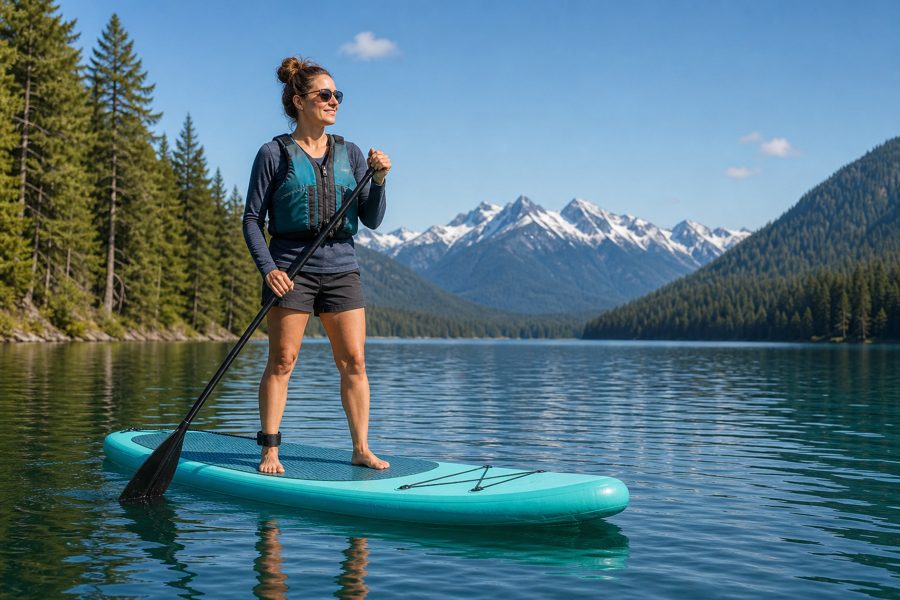
Car zone: towel, complete dry clothes, shoes and anything you only need after paddling. Dry-bag zone: keys, medication, warm layer, snacks and a backup phone battery. On-body zone: life vest, sun protection and clothing suited to the water temperature. This keeps essentials findable when the shoreline is busy.
What changes for Lake Union?
Add a visible light for an evening plan, confirm your public access point and give yourself extra parking time. For the Seattle Paddle Rave, use the current Rave guide because event launches and gathering details can differ from a normal lake day.
What changes for Rattlesnake Lake?
Add warm layers, an early departure and a backup plan for limited parking. The water is cold and the recreation area is shared with hikers. Our Rattlesnake Lake parking and launch guide covers the exact trip.
What changes for a family?
Bring more snacks and dry layers than the route appears to require, and keep the first paddle short. Confirm that each child has a properly fitted life vest before leaving pickup. A double kayak can simplify supervision because the adult and child stay in the same craft.
The two things people most often forget
The first is the park requirement: a pass, reservation or posted launch rule that was easy to miss at home. The second is a warm change of clothes. Equipment gets attention because it is large; comfort details are what determine whether an unexpected splash becomes funny or miserable.
Use a five-minute return checklist
Before leaving the shoreline, account for every paddle piece, fin, life vest, dry bag, phone case and pump cable. Check the waterline for trash, plants or mud caught on the equipment, then load wet personal items separately from the packed board.
At home or camp, hang personal clothing and towels immediately. Do not leave food, sunscreen or a wet dog towel sealed beside the gear overnight. A little organization at the end protects the car and makes the next morning’s launch faster.
One-day checklist vs. week rental
For one day, optimize for a quick launch and dry ride home. For a week, add a dedicated wet-gear bin, cleaning towel, extra charging cable and a predictable spot for the pump. Keep the life vests and paddle with the board after every stop so the kit never becomes scattered across a campsite or hotel room.
The big gear is already handled
Book the complete kit, then use this list for the personal details.