

Paddle Boarding & Kayaking the Washington Park Arboretum
The Washington Park Arboretum is Seattle's secret-garden paddle. Instead of crossing open Lake Washington, you slip behind Foster Island, weave through narrow inlets and watch herons, beavers and waterfowl from water level. On a calm morning, it feels much farther from the city than it is.
The best beginner plan is a short out-and-back from the Foster Island Road landing. More confident paddlers can make a loop around Foster Island or continue into Union Bay. This guide maps the useful access points, explains the carry and shows where protected water becomes more exposed.
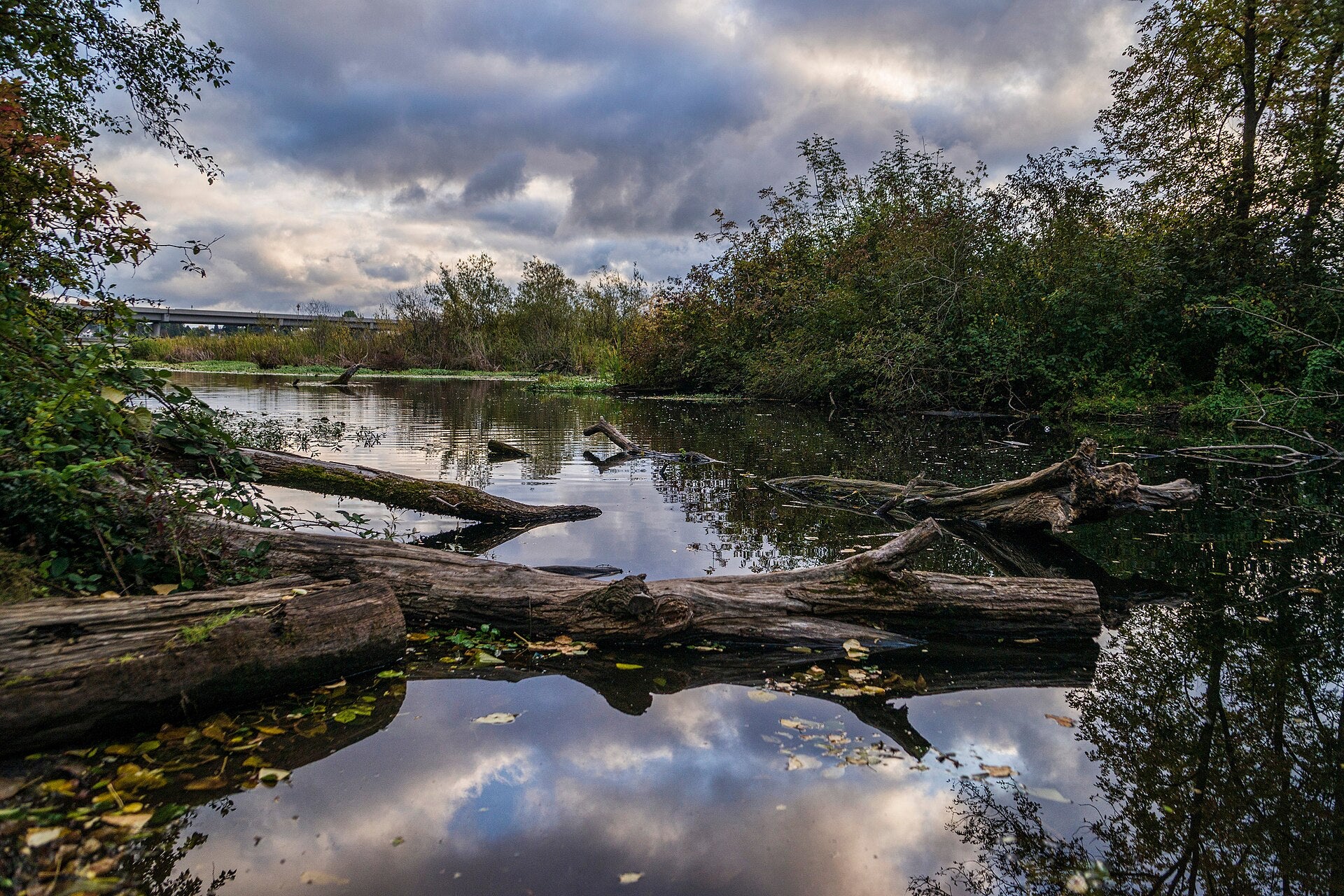
Foster Island Road landing
A small waterfront landing inside the Arboretum. It puts you directly into protected water without crossing Union Bay first.
Foster Island loop
Circumnavigate the island when passages are clear, or turn the route into an out-and-back if vegetation, wind or comfort says otherwise.
Kayak for tight channels
A kayak glides through narrow vegetation most easily. A stable SUP works well in open inlets on a calm day.
Dawn to 8 p.m.
The Arboretum is free and open daily. Launch facilities are minimal, so arrive ready to carry and inflate near the water.
Arboretum and Union Bay paddle map
The green marker is the easiest in-park launch. Blue markers are route landmarks or alternate launch businesses, not equivalent free public launches. Tap a marker for its role and directions.
Where to launch
Foster Island Road landing: closest to the quiet water
The Arboretum's official boating guidance identifies a small landing along Foster Island Road. This is the most direct place to put in a portable paddleboard or kayak. Parking is free but scattered through the Arboretum, and the closest legal space is not guaranteed. Expect a short carry rather than a dockside unload.
The landing itself is simple: no rental counter, pump station or dedicated launch restroom. The Graham Visitors Center has restrooms farther south in the park, and those hours are more limited than the grounds. Use facilities before walking to the water and pack out everything you bring.
UW Waterfront Activities Center: an alternate east-side start
The University of Washington's Waterfront Activities Center sits west of the Arboretum on Union Bay and has seasonal boat operations. It can be an alternative when you want to cross open Union Bay before reaching Foster Island, but access, parking and rental hours follow UW rules. That crossing is less protected than launching inside the Arboretum and is not the best first-time plan on a windy day.
Aqua Verde: a longer urban approach
Aqua Verde Paddle Club operates near Portage Bay and is useful for people renting on the water. Reaching the Arboretum means traveling through the Montlake Cut, a working boat corridor with traffic, wakes and current. Treat it as a separate, more advanced outing—not a shortcut to the quiet Foster Island loop.
A relaxed Foster Island route
Launch at the landing and take a few minutes in the protected inlet before choosing a direction. Follow the island edge at a slow pace, leaving space around lily pads, nests and wildlife. The full loop is short on a map, but it rewards wandering; narrow passages, beaver activity and changing vegetation are the attraction.
Water levels and plant growth change the usable channels through the season. If a passage looks clogged or too shallow, turn around instead of pushing through habitat. An out-and-back along the open edge delivers almost the same scenery and makes navigation easy. Do not drag fins across shallow vegetation.
Experienced paddlers can continue north and east into Union Bay. The water becomes more open beyond the protected inlets, and wind or boat wakes can change the feel quickly. The Montlake Cut is farther west and carries concentrated vessel traffic; there is no need to enter it for a satisfying Arboretum paddle.
Parking, amenities and timing
Parking
Free Arboretum lots and roadside spaces are spread along the park. Weekend spaces near Foster Island are limited, so early arrival reduces both the search and the carry.
Restrooms
There is no full-service facility at the landing. Public restrooms are near the Graham Visitors Center, a substantial walk south of Foster Island.
Water conditions
Inlets are usually protected. Union Bay can collect wind and wakes, while the Montlake Cut adds current and concentrated boat traffic.
Best time
Go early for easier parking, quieter wildlife viewing and lower odds of afternoon wind. Leave the water well before the Arboretum's 8 p.m. close.
SUP or kayak?
A kayak is the easiest choice when vegetation is thick or you want a low, stable wildlife-viewing platform. A paddleboard offers a better view into the water and feels wonderful in the broader inlets. Shorter fins are helpful in shallow areas, but no fin setup makes it appropriate to force a route through plants.
For a first visit, choose whichever craft you already control confidently. The route's appeal is slow exploration, not distance. Our Seattle paddleboard vs. kayak guide compares stability, setup and carrying if you are deciding between them.
Respect the Arboretum's wild edge
The waterfront is intended for nonmotorized boats, and wildlife is part of the reason to come. Give birds and beavers room, keep music low, avoid landing in restoration areas and do not cut through dense lily pads. A life jacket and leash appropriate to your craft remain smart even in protected water.
Bring the boat to the quiet water.
Our inflatable boards and kayaks fit inside a normal car and include paddles, life jackets, an electric pump and dry bags.
Book portable Lake Washington gearPlanning a second launch? Compare all 20 Lake Washington paddle spots or browse the best places to paddle board near Seattle.
Map data: © OpenStreetMap contributors. Access details checked August 4, 2026; confirm current signs, UW operations and park notices before visiting.
.jpg)
